
ATA's flagship publication since 1972
The ATA Chronicle is the official publication of the American Translators Association. Published six times per year, each issue offers resources and practical solutions to challenges facing translators and interpreters, as well as member news and announcements.
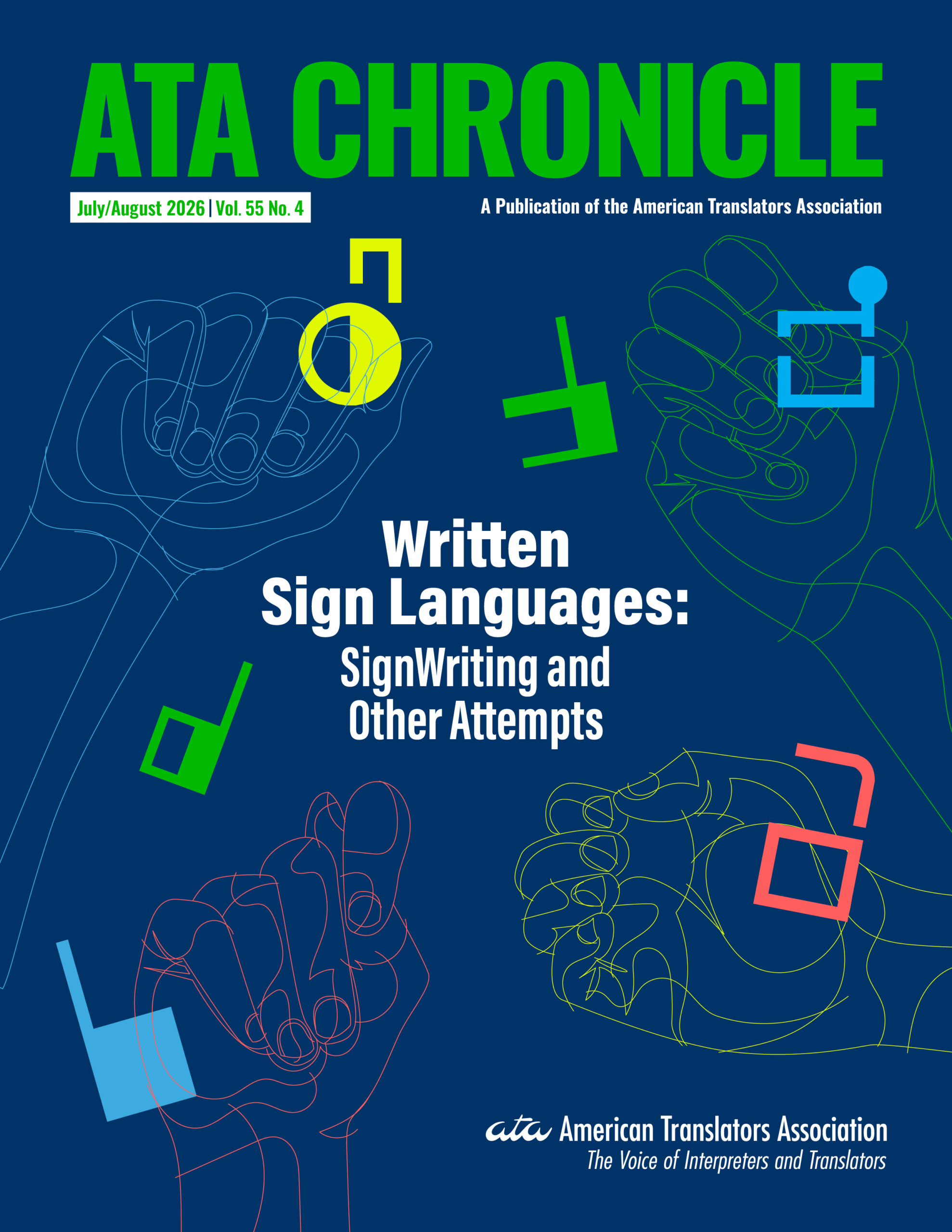
Read the Current Issue(opens in new tab)
The online edition of The ATA Chronicle allows you to view on mobile devices, download, search, and add notes.
Search the Archives(opens in new tab)
Browse an impressive library of current and past issues. Discover featured bonus material, including the “Member News” and “Humor and Translation” columns.











Over the many years I’ve been a grader, I’ve seen how incredibly useful exam preparation workshops and practice tests can be. I’ve also seen an…
ATA Members-Only Content This content is an exclusive benefit for ATA members. If you are a current ATA member, log in for immediate access. Log…
ATA Members-Only Content This content is an exclusive benefit for ATA members. If you are a current ATA member, log in for immediate access. Log…
ATA Members-Only Content This content is an exclusive benefit for ATA members. If you are a current ATA member, log in for immediate access. Log…
Write an Article
Gain recognition in the industry by sharing your unique knowledge and experience. The ATA Chronicle welcomes original articles of interest to the fields of translation and interpreting.
Advertise With Us
Read by thousands of people in over 100 countries, The ATA Chronicle offers advertisers a unique opportunity to market directly to translators, interpreters, and language services providers.
Editorial Policy
The editor and editorial board are responsible for the day-to-day operation of The ATA Chronicle. Read full policy.
Publisher's Disclaimer
Statements of fact or opinion are the responsibility of the authors alone and do not imply an opinion on the part of the officers or the members of ATA.
Reprint Permission
Requests for permission to reprint articles must be sent to the editor at jeff@atanet.org.