

Best Practices for Virtual Interpreting: What Clients and Language Service Users Should Know

Thanks to rapid technological shifts and the global landscape of recent years, the demand for virtual interpreting services has increased. Virtual interpreting is a linguistic solution that allows people in different locations to connect with professional interpreters who help break down language barriers.
Virtual interpreting is used in a wide range of settings, the most common being healthcare, but also including education, business, and legal forums as well as conferences. Virtual interpreting can also be used under different modalities including over-the-phone interpreting (OPI), video-remote interpreting (VRI), or remote-simultaneous interpreting (RSI). Learn about the differences between VRI and VSI at the American Translators Association website.
Successful virtual interpreting is a shared responsibility between interpreters and the users of language services. This article will explore how interpreters prepare for their assignments, their requirements to be able to provide high quality interpreting, what clients and language service users should be aware of during interpreting sessions, and what both can do to get maximum benefit from the interpreting experience.
What is Required on the Part of the Interpreter?
Professional interpreters are ready to meet defined standards and are prepared to work remotely. When working for interpreting agencies or companies, interpreting professionals are required to comply with the following standards:
- Professional qualifications and training: This includes formal education or proven technical knowledge in interpreting, specialized training (the most common specializations being medical and legal), and familiarity with interpreting protocols and relevant professional standards.
- Ethical and legal compliance: Interpreters must adhere to confidentiality and privacy obligations, HIPAA training and compliance for medical settings, professional conduct, respect, and neutrality.
- Technical readiness for virtual interpreting: Interpreters must be equipped with a reliable computer or device, a headset with an incorporated microphone and noise-cancelling feature, and possess a reliable and steady Internet connection.
- Professionalism in the work environment: Interpreters must provide services in a quiet and private space that protects client privacy. They should display a neutral background for remote work and the interpreter must have a professional appearance for VRI and RSI by wearing appropriate clothing consistent with professional settings.
Whether hiring a professional interpreter through an agency or privately, it’s important to make sure that the professional selected meets the above-mentioned standards.
What Should Clients Be Aware of During Interpreting Sessions?
Understanding what happens during a virtual interpreting session helps clients work more effectively with the professional interpreters on their projects. The following information about what is expected during VRI, OPI and RSI is useful for successful interpreting:
- Communication dynamics in virtual interpreting: It is essential for clients and language service users to understand what kind of interpreting technique will be used. During a consecutive interpreting session, interpreters take notes and reflect before rendering a message after quickly analyzing it. It is of paramount importance to respect each speaker’s turn during the interpreting session.
- Interpreting protocols and interventions: During interpreting sessions, language professionals make use of specific protocols to decide when to intervene and ask for clarification or repetition, for example. The interpreter may also ask clients to speak more slowly or in shorter sentences. These interventions are normal and necessary for accurate interpretation. Being familiar with these protocols and interventions fosters smooth communication.
- Linguistic and cultural factors: Language professionals interpret for people who often come from different countries and, therefore, interpreters must process differences in accents, regional vocabulary, and country-specific expressions. Because of this, interpreters may pause to verify terminology, ask for words to be spelled out, or use a brief explanation when interpreting to navigate cultural nuances.
What Can I Do as a Language Service User to Improve the Interpreting Experience?
For Scheduled Interpreting Sessions:
- Share relevant materials in advance (glossaries, industry terminology, presentations)
- Provide context about the interpreting session’s purpose and setting
These additional steps allow interpreters to prepare in advance and be ready to face any challenges that may arise during the actual session. Communication will be much smoother if the interpreter is already familiar with the technical terminology that may appear during the session and if the professional language provider knows who will be present.
For On-Demand Interpreting Sessions:
- Offer a brief overview of what the session will address
- Identify the subject matter and participants when beginning
For All Virtual Interpreting Sessions:
- Be familiar with basic interpreting protocols
- Speak clearly and at a moderate pace
- Practice patience and allow time for interpretation
- Be aware of the type of interpreting being used (consecutive vs. simultaneous)
- Minimize background noise and interruptions
Conclusion
Effective virtual interpreting is a collaborative process. Preparation and awareness improve outcomes for everyone involved in interpreting sessions. Next time you are hiring an interpreter, remember to take into account that as a client, you have an active role in boosting the interpreting experience and can do so by following the tips presented in this article.
About the Author
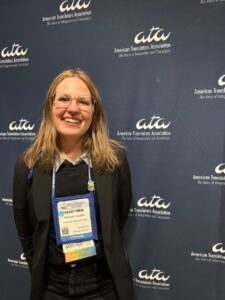 Martina Capelle is a Certified translator (English – Spanish) graduated from the University of Buenos Aires. She works as a freelance translator and interpreter and has over 3 years of hands-on experience as an over-the-phone and video-remote medical interpreter. As of 2026, Martina will be pursuing her postgraduate studies in consecutive & simultaneous interpreting. Martina offers translation, interpreting, proofreading and editing, and MTPE services and is specialized in the legal, economics & finance and medical fields. The American Translators Association represents almost 9,000 translators and interpreters in more than 100 countries. To hire a translation or interpreting professional, please visit www.atanet.org/directory.

Subscribe to The ATA Compass
Connect with The ATA Compass
Recent Posts

Why You Should Use a Certified Translator or Interpreter
Choosing a Certified Professional is the Smart Choice A certified translator or interpreter ensures effective, accurate, and culturally sensitive communication that truly bridges the gap between languages and cultures. Accuracy…
Why Should I Hire a Professional?
It takes more than just the ability to understand two languages. Professional translators and interpreters have the education, experience, and expertise to understand the nuances in one language and transfer…

Client Assistance
Need Help Finding the Right Professional? Getting your message wrong can cost money, ruin your image, and even cost lives. It pays to hire a professional translator or interpreter to…
The ATA Compass
Want to reach more customers, grow your business, and improve your bottom line? The ATA Compass publishes articles and provides resources to show you how language professionals can help you…

Machine Translation
What is Machine Translation? Machine translation (MT) is the use of automated software that translates text without human involvement. Adaptive MT is a technology that learns and adjusts in real-time…

Verify ATA-Certified Translator® Status
Enter a certification number and click to verify! Note: You cannot verify certification with a membership number. You must enter the translator’s certification number. What is the ATA Certification Program?…