

From Roncando to the Record: Best Practices for Forensic Transcription/Translation (FTT)
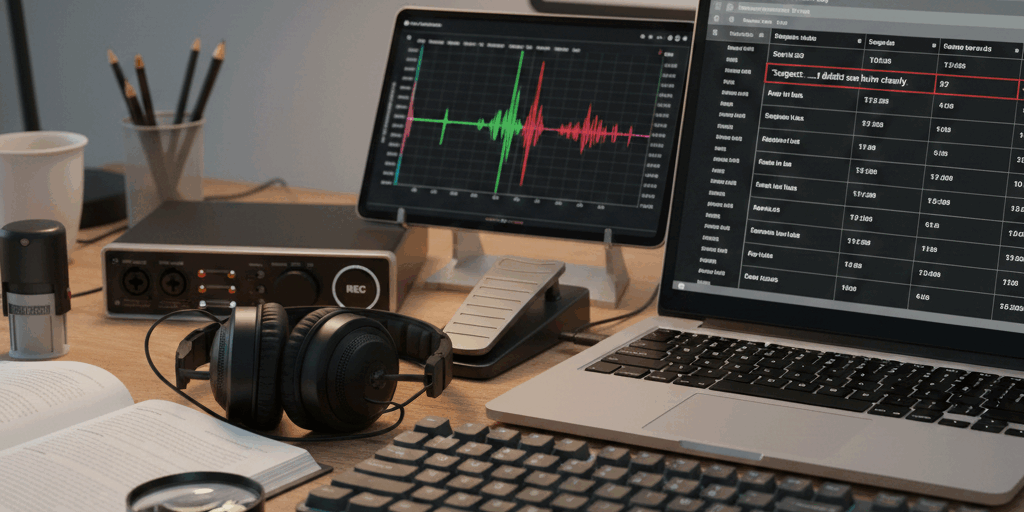
At 2:09 p.m. on October 29, 2024, Damian Valdez-Galloso, a Cuban man living in Hialeah, Florida, was interrogated by a Miami homicide detective for allegedly killing Jose Manuel Carbajal Zaldivar, a Cuban reggaeton artist popularly known as “El Taiger.” He and the detective talked exclusively in Spanish, and in the subsequent three hours and eight minutes, he answered the detective’s questions and maintained his innocence. He described the victim’s struggled breathing as “roncando” (snoring) and demonstrated it for the record. When the detective left the room, he laid his head down on the table and napped. When the detective came back, they continued talking as they ate pizza and drank water. And at the end of the interrogation, before being handcuffed and escorted out of the room, the detective showed Valdez-Galloso video footage of the alleged murder, which the suspect claimed was “manipulado” (manipulated).
In foreign-language interrogations like this, everything is caught on camera and can be used against the suspect in a court of law. And because of that, every word that is said and every action that is done has to be written down and translated. Not only the big words, but also the small ones: Um’s and uh’s must be accounted for. Half-words too: If the suspect wanted to say “Estaba ahí” (I was there), but stopped themself part-way, it would be documented as “Estaba a-,” (I was th-,). What if they stuttered? “Estaba a-, eh, yo est-, pero [tose] – ¿dónde estaba yo?” (I was th-, uh, I wa-, but [coughs] – where was I?)
This practice of documentation is known as Forensic Transcription/Translation, and it is integral to criminal cases around the country.
What is Forensic Transcription/Translation?
Forensic Transcription and Translation (FTT) is a highly specialized branch of forensic linguistics that converts audio and video recordings into written evidence for legal proceedings. These recordings can be statements to law enforcement, police body camera footage, wiretaps, and several other kinds of media. And unlike the “cleaned-up” captions and subtitles in movies and TV shows, FTT requires a verbatim approach – every word matters.
Bilingual FTT transcripts must be formatted in a way that is easy to follow. As described in Fundamentals of Court Interpretation, the recommended format is a four-column table. Below is an example Spanish-English excerpt with Unidentified Males 1 and 2 (UM1 and UM2):
| Speaker | SOURCE TRANSCRIPTION | TARGET TRANSLATION | |
|---|---|---|---|
| 1 | UM1: | Okay. ¿So dónde estabas el viernes por la noche? | Okay. So where were you on Friday night? |
| 2 | UM2: | Estaba a-, eh, yo est-, pero [tose] - ¿dónde estaba yo? | I was th-, uh, I wa-, but [coughs] - where was I? |
| 3 | UM1: | Sí. El viernes-- | Yes. On Friday-- |
| 4 | UM2: | ¿El viernes pasado? ¿O, o el sábado? | Last Friday? Or, or Saturday? |
You can find a longer FTT transcript at this link. It shows the transcription and translation of a segment from the interrogation referenced above.
This work requires a special attention to detail and emotional tolerance that is distinct from other linguistic services. Forensic transcriptionists will spend hours transcribing and translating footage that might only be minutes long. And not only that, they must be able to psychologically handle watching (and rewatching) the content of that footage. Because of these requirements, there are relatively few linguists who are willing and capable of providing this service.
How to Find a Forensic Transcriptionist
What to Look For
The two most important factors when looking for a forensic transcriptionist are: Experience and Certification.
Experience: This goes without saying. A highly experienced forensic transcriptionist will be familiar with applicable best practices, and they will also have a strong knowledge of slang terminology and dialectal differences in the languages they are translating.
Certification: Two relevant types of certifications are relevant – Interpreting Certification and Translation Certification.
- Interpreting Certification: A state- or federal-level court interpreting certification proves a linguist’s ability to handle spoken dialogue, but does not necessarily translate to strong transcription or translation skills.
- Translation Certification: Certification by the American Translators Association proves a linguist’s high-level translation ability, but does not specifically test transcription speed or the ability to translate the nuances of spoken dialogue.
Unfortunately, there is no credible certification for bilingual forensic transcription. While the above certifications are not 100% related to this kind of work, they can still be helpful in demonstrating professional dedication to forensic transcription.
Where to Look
The American Translators Association Directory is a primary resource for finding translators who specialize in legal and forensic work. Along with entering the desired source and target languages (for example, English and Spanish), entering “transcription” or “forensic transcription” as a keyword limits search results.
In addition, many high-level experts rely on word-of-mouth and personal referral networks. The following is a common scenario: a lawyer needs a police statement transcribed and translated, so they contact a court interpreter they know well. Although that interpreter would like to do it, they’re simply too busy that month with interpreting appointments. But the interpreter knows someone else who does forensic transcription, so they refer the lawyer to that person.
Pricing and Timelines
While the National Association of Judiciary Interpreters and Translators (NAJIT) in its position paper on FTT that one minute of audio should take one hour of work by the transcriptionist, in fact, work speed depends on several factors, including:
- Audio Quality (a transcriptionist might have to listen to the audio multiple times)
- Number of Speakers (identifying speakers and documenting interruptions may take additional time)
- Recording Type (wiretaps are often more complex and time consuming to process than two-speaker police statements)
- Speaker Accents (some accents are harder to understand than others)
Experienced forensic transcriptionists should ask to see or listen to the recording before accepting the job so that they can estimate their quote with these factors in mind. Professional rates can vary widely, and they are usually billed per audio minute of the source audio or video file.
Conclusion
Forensic Transcription and Translation is more than a linguistic service – it is a critical component of the judicial process that ensures evidence is preserved exactly as it occurred. For legal professionals, partnering with a specialized expert is an investment in the accuracy and defensibility of their case, and it ensures that voices are heard with the precision that justice requires.
About the Author
 Peter Kashatus is a Spanish to English translator who specializes in forensic transcription/translation (FTT) for criminal cases and law enforcement investigations across the United States. He has transcribed and translated footage from police statements, body-worn cameras, and undercover wires. He has helped produce thousands of pages of FTT evidence for cases from a wide variety of topics, including murder, drug trafficking, and sexual abuse. He is based in the Philadelphia area. More at www.kashatuslanguagesolutions.com.

Subscribe to The ATA Compass
Connect with The ATA Compass
Recent Posts
The ATA Compass
Want to reach more customers, grow your business, and improve your bottom line? The ATA Compass publishes articles and provides resources to show you how language professionals can help you…

Why You Should Use a Certified Translator or Interpreter
Choosing a Certified Professional is the Smart Choice A certified translator or interpreter ensures effective, accurate, and culturally sensitive communication that truly bridges the gap between languages and cultures. Accuracy…

Know Your Rights to Language Access
Is English Not Your Primary Language? If you have a limited ability to read, write, speak, or understand English, you are considered to be Limited English Proficient (LEP). As an…

Exploring Translation and Interpreting Services
Why Are Language Services Essential in an Internationalized World? In a world where communication knows no bounds, effective language services are paramount. ATA helps you find professional translators and interpreters…

Language Services Directory
Start Your Search ATA’s Language Services Directory includes a list of all ATA members of individuals, as well as companies. Need help finding the right professional? Professional translators and interpreters…

What is a Certified Translation?
What are the basics of a certified translation? In the United States, anyone can certify a translation. A translator does not need to be certified in order to provide a…