
What's Happening Now?
ATA provides a snapshot of the current news, events, articles, podcasts, and more. ATA members receive a monthly e-newsletter that highlights this vital information.
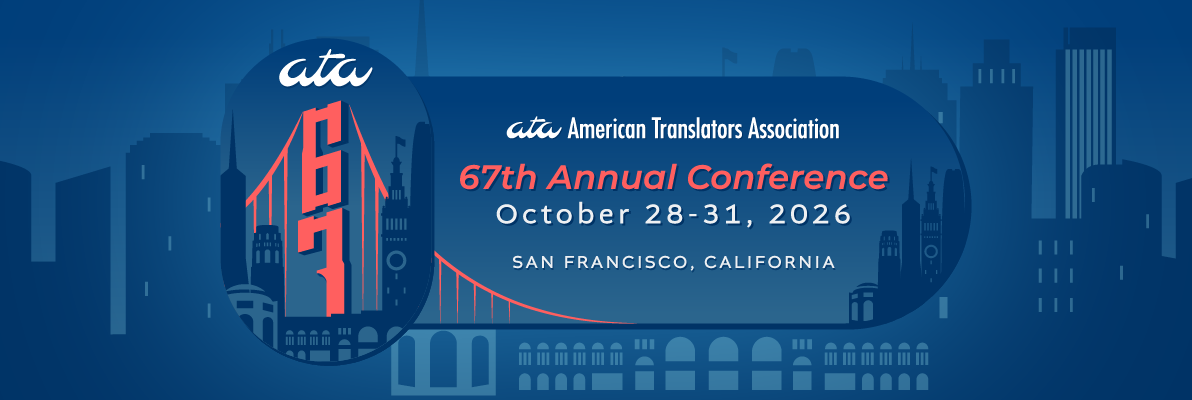
Don’t miss your chance to join us in San Francisco, October 28–31, 2026, for our most anticipated event of the year! Take advantage of early registration rates until October 12 and save!
Still on the fence about attending? Here are just a few highlights that might help you decide:
Intensive and Interactive: Advanced Skills & Training Day!
Happening Wednesday, October 28, this “conference-before-the-conference” is your opportunity to take your skills to the next level. Choose from a selection of three-hour courses in multiple subject areas. Explore the full course list here! (Note: Along with your conference registration, additional fees are required.)
Over 110 Sessions
ATA67 offers comprehensive educational opportunities, providing valuable insights, effective solutions, and innovative strategies. You’ll be inspired and challenged to consider new ideas that help you prepare for what’s next. Check out the full agenda!
Continuing Education Credit
Earn while you learn! ATA67 provides continuing education credit opportunities for both ATA-certified translators and credentialed interpreters.
Non-Stop Networking
ATA67 offers specialized networking opportunities, fostering growth through diverse perspectives to turn ideas into action. You’ll build partnerships and community, helping you realize what’s possible. Networking highlights include the Exhibit Hall, Job Fair, Brainstorm Networking, Buddies Welcome Newbies, the T&I Book and Resource Fair, After Hours Café, and more!
ATA67 Keynote Address
We’re excited to announce this year’s keynote speaker: Joachim Lépine! This best-selling author will share his passion for reclaiming human value and developing AI resilience.
For all language professionals, ATA67 is your opportunity to stay in the know, plan for the future, and build connections with your community.
We’re excited to welcome you to San Francisco!
Stand Out at ATA67 as a Sponsor or Exhibitor
ATA67 puts you in front of 1,000+ language services experts shaping the future of T&I! Connect with them, as well as our entire membership, before, during, and after the conference as a sponsor or exhibitor. This is your opportunity to market your company, find top talent, and demonstrate your commitment to excellence.
Get special in-person access to thought leaders and decision-makers looking for solutions. Find new partners and generate bold ideas! When you sponsor or exhibit at ATA’s Annual Conference, you’ll be able to sell your solutions, generate leads, and amplify your brand. Visit the exhibitor and sponsor pages on the conference website to find options for any budget.
Have questions? Download the Prospectus or contact Kim Munroe at exhibit-sponsor@atanet.org to explore your options.
Become a Sponsor! Become an Exhibitor!
Assistant Proctors Needed for the Certification Exam at ATA67
The Certification Committee needs four dedicated individuals to serve as assistant proctors during the certification exam at the conference. Learn more below and email Certification Program Manager Caron Bailey at caron@atanet.org if interested.
Date: Wednesday, October 28
Time: 8:30 a.m.–12:30 p.m. (the actual exam runs from 9:00 a.m.–12:00 p.m.)
Location: Hyatt Regency San Francisco
RSVP: By October 21, 2026
Compensation: $75 stipend. Alternatively, if you’re ATA-certified, you can earn 2 CEPs of volunteer credit instead of the stipend.
As an ATA member, you have the chance to contribute to the future of language professionals while earning a little extra money or CEPs for your participation. If you’re passionate about promoting excellence in language proficiency and want to give back to the community, this is a great opportunity to get involved!
Not interested in proctoring but want to take the certification exam? There are still a few spaces available. If you would like to register for the exam, please do so here by October 13, 2026.
ATA actively works with government agencies and organizations on the issues that affect you. Through ATA's advocacy efforts, you will benefit from the success we achieve together. Being an ATA member supports these efforts.

An internal Department of Homeland Security (DHS) email raises new questions about the agency’s efforts to identify non-U.S. citizens who may be on state voter rolls or have cast ballots in the past.
In the email—which was sent last year—DHS personnel shared a 78-page document listing counties and states that offer election materials and ballots in non-English languages. The list of jurisdictions was attached alongside a Department of Justice criminal checklist outlining requirements for the prosecution of voter-related charges.
The email was included in materials released after the Democratic National Committee (DNC) filed suit over a public records request.
DHS said in a statement that anyone who votes illegally shouldn’t be able to “use a purported lack of knowledge” of English to avoid prosecution. In recent weeks, federal authorities have charged a number of individuals with alleged illegal voting.
Democrats fear the Trump administration’s efforts to root out noncitizen voters will entangle or intimidate eligible voters and reduce turnout in this year’s midterms.
The email worries Dan Freeman, the DNC’s litigation director and a former Department of Justice Voting Section attorney. “The logical inference that I think anyone would make is that they are thinking about the prosecution of federal election crimes in jurisdictions where elections are conducted in a language other than English.”
NPR (9/18/26) By Miles Parks, Jude Joffe-Block, and Ximena Bustillo
The Massachusetts Office of the Child Advocate (OCA) released a new policy brief examining barriers to equitable access to state services for children and families who speak languages other than English.
More than a quarter of Massachusetts residents speak a language other than English at home, a rate that is growing faster than the national average. For children and families navigating child welfare, juvenile justice, behavioral health, and other state services, the ability to communicate effectively in the language they speak is essential to accessing and receiving quality care and support.
The OCA’s research, which focused specifically on state services delivered through contracted providers, found that children and families do not always have meaningful access to services in their language. In some cases, particularly when language-access resources are not readily available, the OCA found that children are asked to interpret for their parents or caregivers.
Alternatively, providers use unreliable translation/interpreting tools and/or rely on bilingual staff who are untrained in the appropriate area of expertise. This lack of expertise places children and their families in difficult and potentially harmful situations and compromises the accuracy and quality of information exchanged between families and providers.
“Language should not be an additional barrier to services that children and families need and deserve,” said OCA child advocate Marisol García. “Given the wide variety of state agency service providers and languages spoken in the Commonwealth, we need to work together to improve the accessibility of these services for individuals for whom English is not their first language.”
Office of the Child Advocate (9/22/26)
The National Book Foundation has announced the Longlist for the 2026 National Book Award for Translated Literature. The finalists in all five categories will be revealed on October 6 in The New York Times. Winners will be announced at the 77th National Book Awards Ceremony and Benefit Dinner on November 18, 2026.
The 10 titles on this year’s Translated Literature Longlist were originally published in seven languages: Arabic, Chinese, French, Indonesian—appearing for the first time as a translated language in the category—Norwegian, Russian, and Spanish. The list features nine novels and a work of nonfiction, and several of this year’s honored authors and translators have been previously recognized by the National Book Award for Translated Literature.
Publishers submitted a total of 159 books for this year’s award. The judges for Translated Literature are Shelley Fairweather-Vega (an ATA member), Javier García del Moral, John Keene, Christopher Merrill (chair), and Azareen Van der Vliet Oloomi.
National Book Foundation (9/15/26)
Mexico’s Supreme Court has ruled that Indigenous people are entitled to an interpreter from the moment they come into contact with criminal justice authorities, even if they have not yet been formally accused.
By a unanimous vote, the court established that the right to interpreter assistance is non-waivable and must be guaranteed throughout the entire proceedings so that Indigenous people are not left defenseless.
“The right of Indigenous people to be assisted by an interpreter is triggered from the first contact with the authorities, even when a person appears as a witness or as someone providing information and not as the accused,” Justice Loretta Ortiz Ahlf, author of the ruling, said.
Justice Giovani Figueroa Mejía stressed that guaranteeing that right “ensures that every Indigenous person can use their own identity when appearing for the first time before judicial authorities under equal conditions.”
Riviera Maya News & Events (9/4/26) By Javier Mendez
Peter Llewellyn-Jones, 76, was an interpreter and teacher who helped establish sign language interpreting as a recognized profession in Britain. Throughout his working life, Llewellyn-Jones devoted himself to improving accessibility and opportunity for Deaf people.
Llewellyn-Jones became a pioneer in the teaching of British Sign Language interpreting and linguistics and developed the U.K.’s first undergraduate degree course in the subject for the University of Wolverhampton in 1992. He was also instrumental in developing sign language interpreting for British television and bringing it to the stage. Beginning in the early 1980s, he worked on 600 professional theater productions across the U.K.
One of the earliest to interpret for productions of the Royal Shakespeare Company (RSC), he worked on RSC main house shows and tours from 1991 to 2000, interpreting alongside Vanessa Redgrave, Kenneth Branagh, Jim Broadbent, and Ian McKellen, among others.
Llewellyn-Jones was also an accomplished actor and writer. He co-wrote and co-presented the second series of Insight (1984), a groundbreaking television program for Deaf children, in which he acted and signed. He also played Mr. Grimley in the children’s television series The Riddlers, which ran from 1989 to 1998.
The Guardian (9/15/26)
More T&I News
AI Hasn’t Replaced These Interpreters—But It Has Degraded Their Working Conditions | Voices of Monterey Bay
Literary Translators Brace Against AI Push | Publishers Weekly
How Raising a Multilingual Tot Helped Me Write a Multicultural Novel | Literary Hub
Osage Nation Considers Public School Language Program | KOSU-FM
Northern Ireland Proposal Would Focus on Single Language | The Conversation

Didn’t receive your proxy ballot and voting instructions? Check your spam folder!
All Voting members were sent an email with a link to the proxy ballot and voting instructions on September 24. If you don’t see this email in your inbox, please check your spam folder.
ATA has partnered with Survey & Ballot Systems (SBS) to administer the 2026 elections. If you are an ATA Voting member and didn’t receive the email from SBS, please contact support@directvote.net.
You should also add the following email address as an approved sender: noreply@directvote.net.
Online voting is currently open until October 29 at 3:30 p.m. Eastern Time. There will be no paper ballots.
Candidate statements are included on the proxy. They are also available now on ATA’s website.
For technical support
Technical support is available Monday – Friday, 8:00 a.m. – 5:00 p.m. CT, excluding holidays. Call +1-952-974-2339 or email support@directvote.net.
Thanks for participating in this year’s elections!

The Membership Development Committee develops and supports initiatives aimed at membership growth and retention. Learn more about the Membership Development Committee. This is a closed meeting for committee members only.…
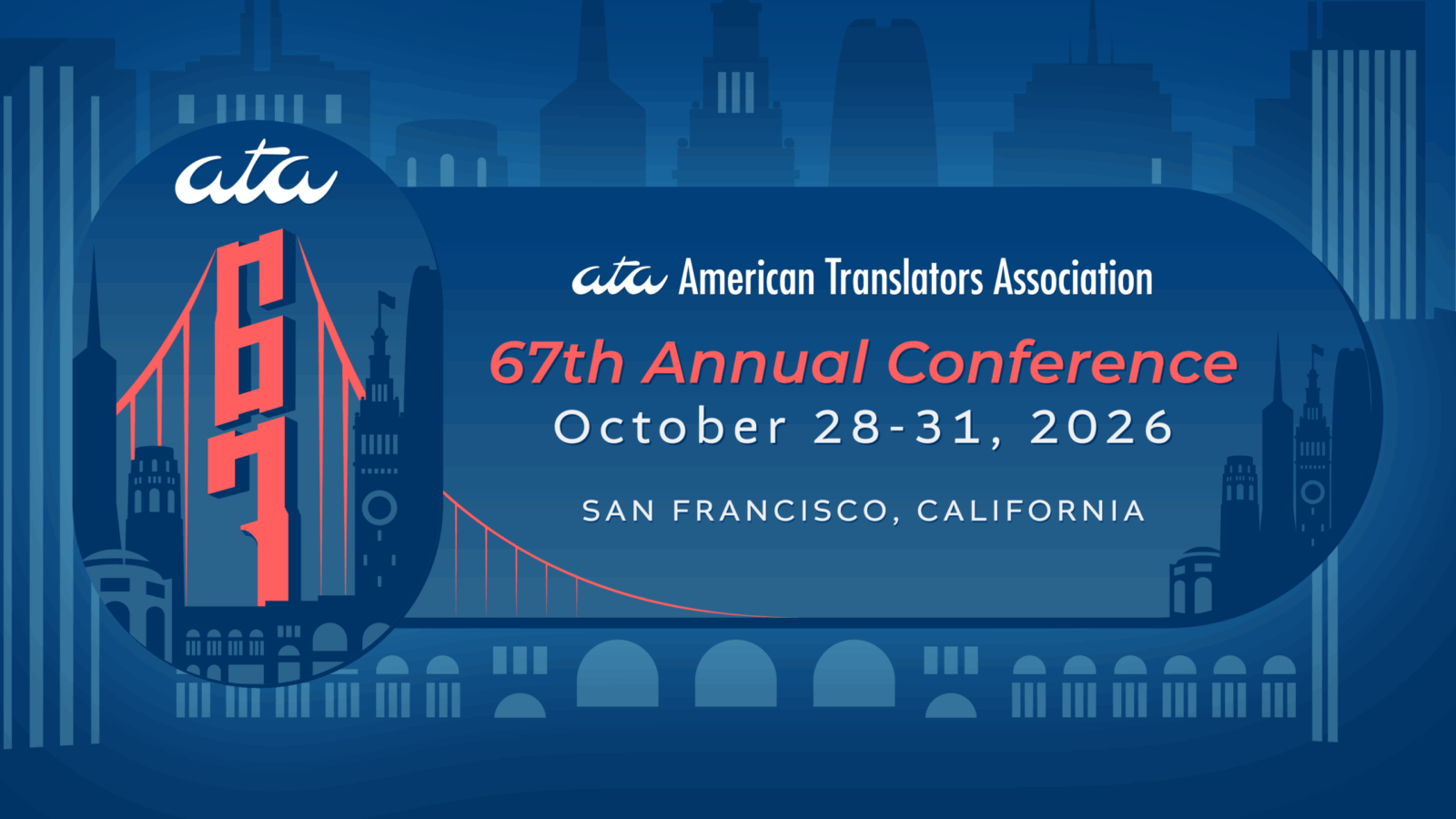
See what’s next. See what’s possible. See what’s in store at ATA67. ATA 67th Annual Conference October 28-31, 2026 | San Francisco, California Learn More

ATA Membership Required You must be an ATA member to register for the ATA Certification exam. ATA membership is not refundable. Join ATA Note: Exams sell out quickly and there…
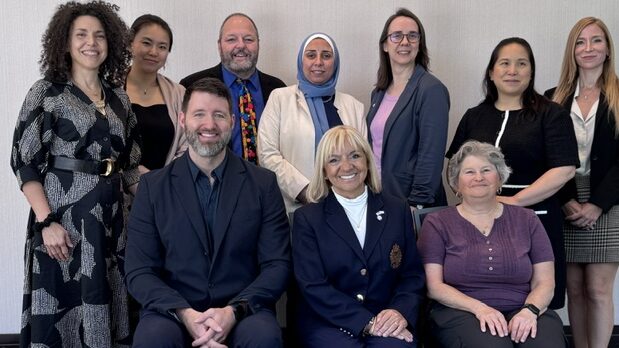
The ATA Board of Directors meets four times a year to establish policy, develop goals and objectives, and oversee ATA’s finances. Get to know ATA’s Board of Directors. Want to attend…

Stop competing in a crowded market and start commanding expert rates by turning your unique background and expertise into a high-demand, AI-resistant translation niche. As AI reshapes the translation market,…

This space is dedicated to celebrating the accomplishments of our members!
Kate Deimling’s debut poetry collection, Time Traveling, was published by Cornerstone Press.
Submit Your Member News!
Do you have news to share with us? If so, you might be featured on our social media channels.

How to Prepare for a Professional Conference
As language professionals, we have a duty to keep up with training and education in our languages and specializations; with technology, legislation, and other developments important to our field; and…

Certified Translation for Life’s Milestones: When You May Need It and What to Know
Achieving major life goals requires careful planning, strict preparation, and often navigating unfamiliar regulatory processes. When those milestones cross language barriers or international borders, getting a certified translation isn’t just…

E119: The 2026 Presidents’ Show
Enjoy this conversation about the state of the translation and interpreting industry and what to expect for the upcoming Annual Conference.

The ATA Chronicle
ATA’s flagship publication since 1972 The ATA Chronicle is the official publication of the American Translators Association. Published six times per year, each issue offers resources and practical solutions to…
Free Monthly Webinar
ATA offers members a free webinar each month, available on-demand for 30 days. Don't miss this month's freebie!

To-MAY-to, To-MAH-to: State Laws, State Lingo, and the Interpreter’s Dilemma
Interpreting criminal charges accurately across state lines is more critical than ever. Learn how to navigate legal terminology differences in a post-COVID, multi-jurisdictional world. Laws differ from state to state,…



Issues of Newsbriefs
- « Previous
- 1
- 2
Get the Member Advantage
ATA members are ready for any challenge with the support of a collaborative community, effective education, and 24/7 promotion in ATA’s Language Services Directory.
Get Noticed!
Advertise in Newsbriefs to reach ATA members each month. Consistently high open rates guarantee your advertising will be seen by thousands of professionals!